

Insight Alone Doesn’t Create Change.
But It’s Where Meaningful Change Begins.
Meet Robbin Cooley, Licensed Professional Counselor in Phoenix
In-Person in Phoenix | Online Across Arizona & Texas
Specializing in work with men in relationships, active and retired athletes, and couples seeking deeper connection.
Change begins where avoidance ends—and insight becomes action.
Many people come to therapy already understanding a lot about themselves. They’ve reflected on their patterns and can often name what’s happening.
But insight alone rarely creates lasting change.
Real change begins when we’re willing to slow down, face what’s uncomfortable, and respond differently.
Like any meaningful relationship, the one between therapist and client works best when we’re clear about expectations and boundaries.
As a therapist for men, here’s what you can expect from me:
I create the conditions that help people move toward the lives and relationships they actually want. My work is relational and grounded in curiosity, collaboration, and accountability.
Many of the people I work with are used to pushing through challenges on their own—athletes, professionals, partners, and fathers who are providers. They’re capable and driven, yet privately feel stuck in patterns they can’t seem to change.
My role is to help you understand what’s happening beneath the surface and translate insight into meaningful change.
And if I had to guess, you’ve probably been carrying this discomfort for a long time.
The difference is this:
The discomfort we lean into in therapy has a purpose. It helps you stop avoiding what keeps you stuck, understand the patterns shaping your reactions and relationships, and begin responding in new ways.
Over time, that work creates a more grounded, confident, and connected version of yourself.
Here’s what I ask of you:
Be as open and honest as you can—with yourself and with me.
There are understandable reasons we avoid certain emotions or conversations. You don’t have to figure them out alone. I’m here to help you slow down, make sense of what’s happening, and face what matters.
Because truly—
If it were easy, you would have already done it.
The experiences that shaped my work.
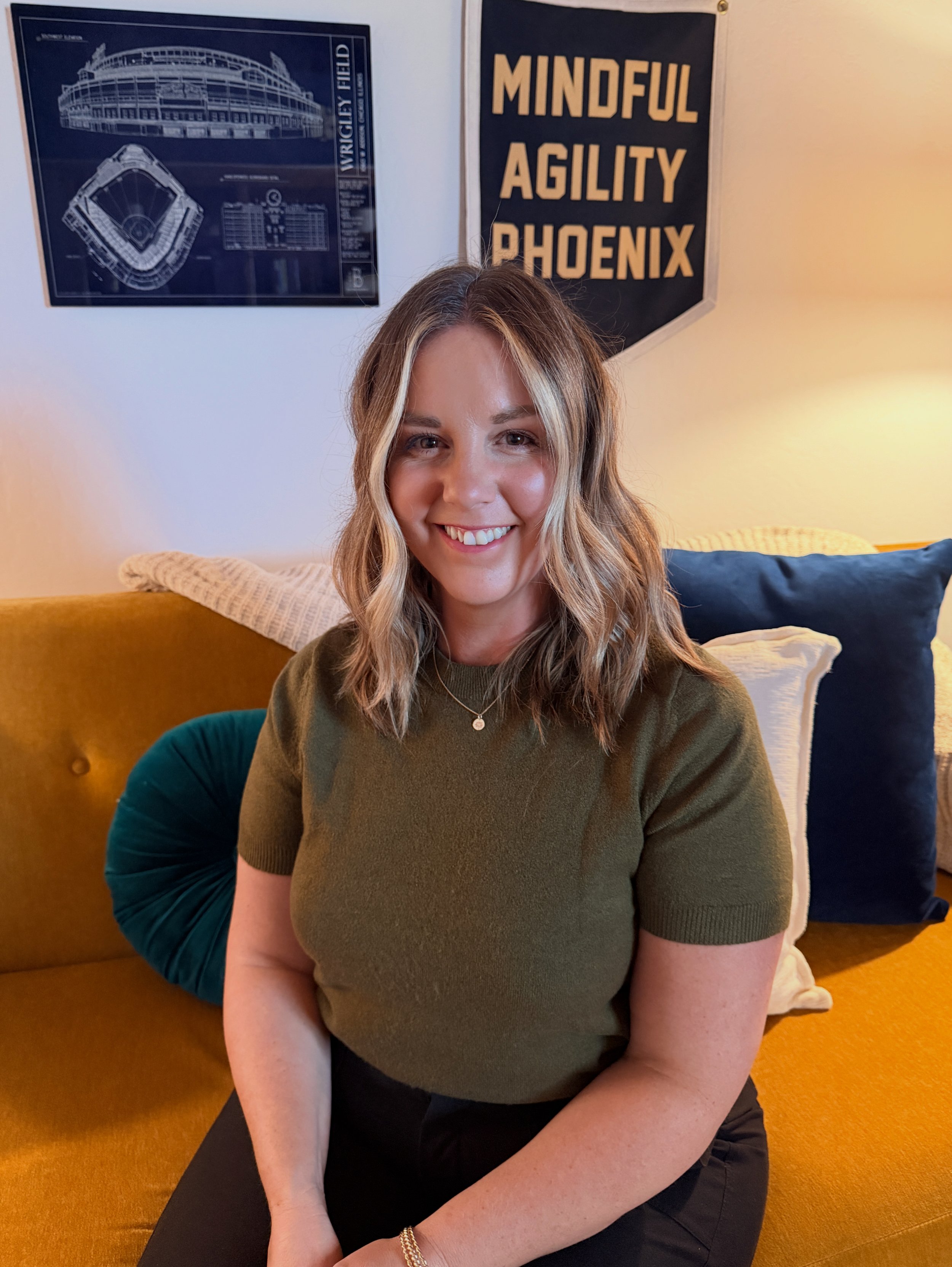
Before becoming a therapist, I spent several years working in Division I athletics, including time with the University of Notre Dame and the University of Illinois at Chicago (UIC). That experience gave me a front-row seat to the pressure, identity, and expectations that often come with high performance.
Athletes learn early how to push through discomfort, stay focused under pressure, and perform when it matters most. Those qualities can be powerful strengths. But when roles shift, careers change, or life outside of sport becomes more complex, the same patterns that once worked can begin to feel limiting.
Working in that environment gave me a deep appreciation for the discipline and resilience it takes to perform at a high level—and also for the ways pressure can shape how people relate to themselves and the people they love. That perspective continues to inform the way I work today, not only with athletes, but with anyone navigating the intersection of identity, performance, and relationships.
My clinical work has also been shaped by advanced training with relationship expert Terry Real in Toronto. His approach emphasizes honesty, accountability, and helping people step out of reactive patterns and into more intentional ways of relating.
Originally from rural Illinois, I’ve called several places home over the years, including Chicago, South Bend, Austin, and now Phoenix. Today I live in Phoenix with my family, where I spend most of my time outside the therapy office enjoying the Arizona sunshine on bicycle—or following the Cubs season, which requires its own kind of emotional resilience.
These experiences continue to shape the way I show up in the therapy room today.
And if I had to guess, the strategies you’ve been using only help for a moment before everything snaps back to the same place.
You’re looking for something that actually lasts.
And that starts with seeing your patterns clearly.
Over time, we all develop beliefs and protective strategies shaped by past experiences.
At one point they made sense—sometimes they even helped us succeed.
But eventually those same strategies can begin to limit us.
Many of the people I work with are used to pushing through challenges on their own. They’re thoughtful, capable, and used to solving problems. But certain patterns—especially in relationships—don’t change simply by thinking harder or trying to push through.
It makes sense that you’re frustrated. Anyone would be.
In our work together, we slow things down and take a closer look at the patterns shaping your reactions, relationships, and decisions. From there, we begin building new ways of responding—creating change that feels more aligned, intentional, and lasting.
You Feel Stuck

My work is guided by several therapeutic frameworks that help us understand patterns, build awareness, and create meaningful change.
-
Relational Life Therapy (RLT), developed by Terry Real, is an approach that helps individuals and couples move out of reactive patterns and into more honest, connected relationships. RLT is known for being both compassionate and direct — helping people recognize the patterns that keep them stuck and learn new ways of showing up with clarity, accountability, and care.
-
Attachment Theory helps us understand how our early experiences shape the way we relate to others. It explores why closeness can sometimes feel safe, uncertain, or overwhelming — and how those patterns continue to influence our relationships today.
-
Self-compassion is the practice of responding to yourself with understanding rather than self-criticism. It involves recognizing your pain, validating your experience, and learning to treat yourself with the same care and patience you would offer someone you love.
-
Internal Family Systems (IFS) views the mind as made up of different “parts,” each with its own emotions, roles, and protective strategies. This approach helps you understand those parts with curiosity rather than judgment, allowing you to develop a more balanced and compassionate relationship with yourself.
-
MA, Clinical Mental Health Counseling, Northern Arizona University
BA, Communication Studies, Augustana College (Ill.)
AZ License #24346
TX License #89610
-
Two-Day Relational Life Therapy Training with Terry Real, Toronto, Dec. 2024
Mental Health First Aid
SafeZone
Motivational Interviewing
-
Northern Arizona University Co-Instructor
Clinical Mental Health Counseling Master’s ProgramIndividual Processes
Group Processes
Ethical Considerations
Practicum Lab Facilitator
-
Adult Group Home
- Co-occurring mental health and substance use disordersArizona State University Counseling Services
Intensive Outpatient Program (IOP)
- Women with substance use disordersGroup Facilitation
- Trauma Processing Group
- Social Anxiety Group
Student-Athlete Support
- University of Notre Dame
- University of Illinois at Chicago (UIC)
My Credentials
Why Mindful Agility Phoenix?

Feeling stuck creates rigidity—in your thoughts, your body, and your emotional world.
It narrows your possibilities and keeps you cycling through the same patterns, even when you’re longing for something different.
Mindfulness invites us to pause and notice what’s happening inside—our feelings, thoughts, and sensations—without judgment. With awareness comes understanding, and with understanding comes room to choose differently.
Over time, this practice builds emotional agility: the ability to respond rather than react, to soften rigid patterns, and to move through life with greater clarity and intention.
Mindful Agility Phoenix is rooted in this process.
It’s about helping you slow down enough to see your patterns clearly, so you can rise into a more grounded, flexible, and connected version of yourself.
Whether you live in the desert of Phoenix, feel the pull of transformation symbolized by the phoenix itself, or resonate with both—
Mindful Agility Phoenix is a place to rise, rebuild, and begin again.
change is possible
—
change is possible —